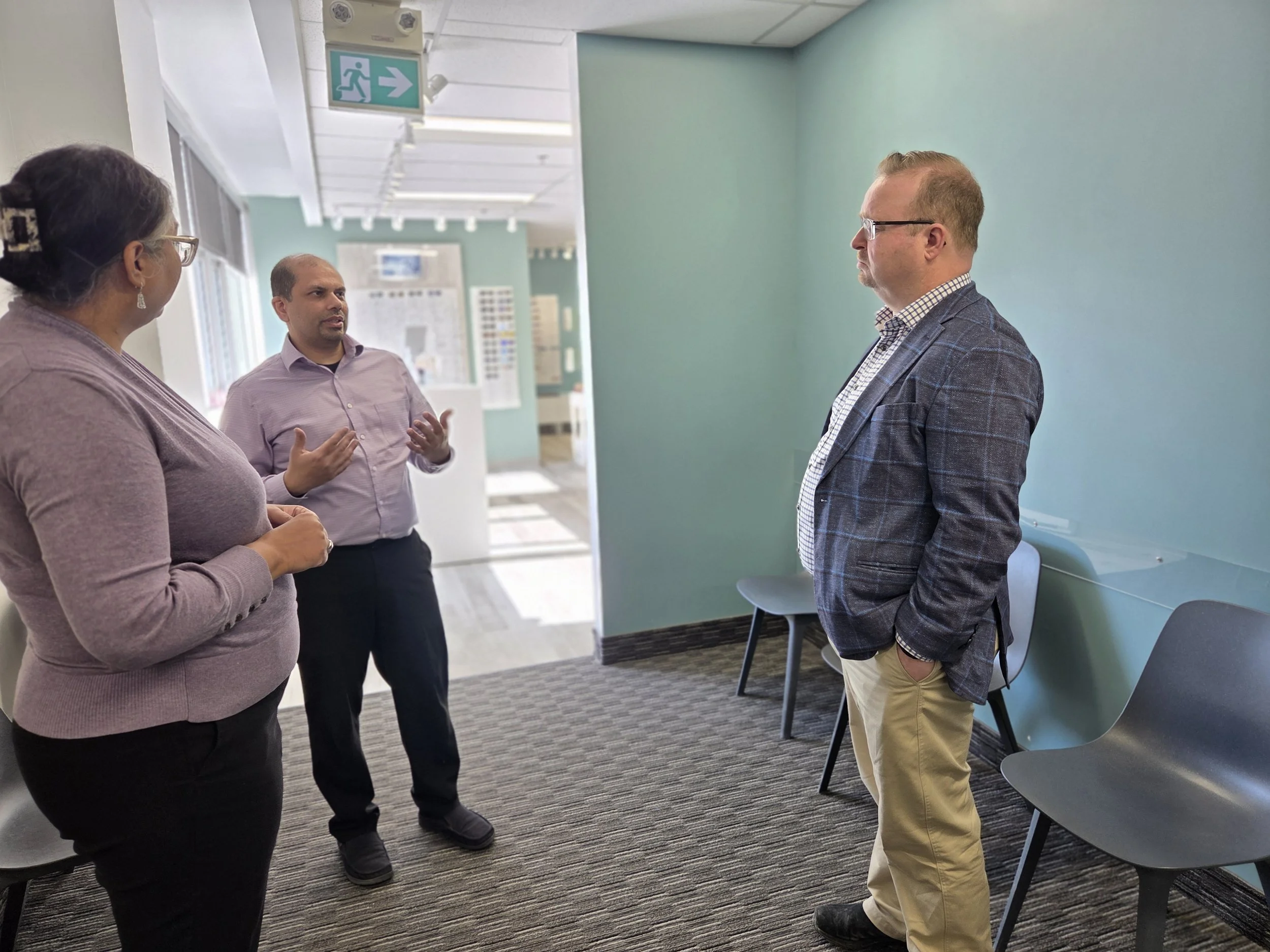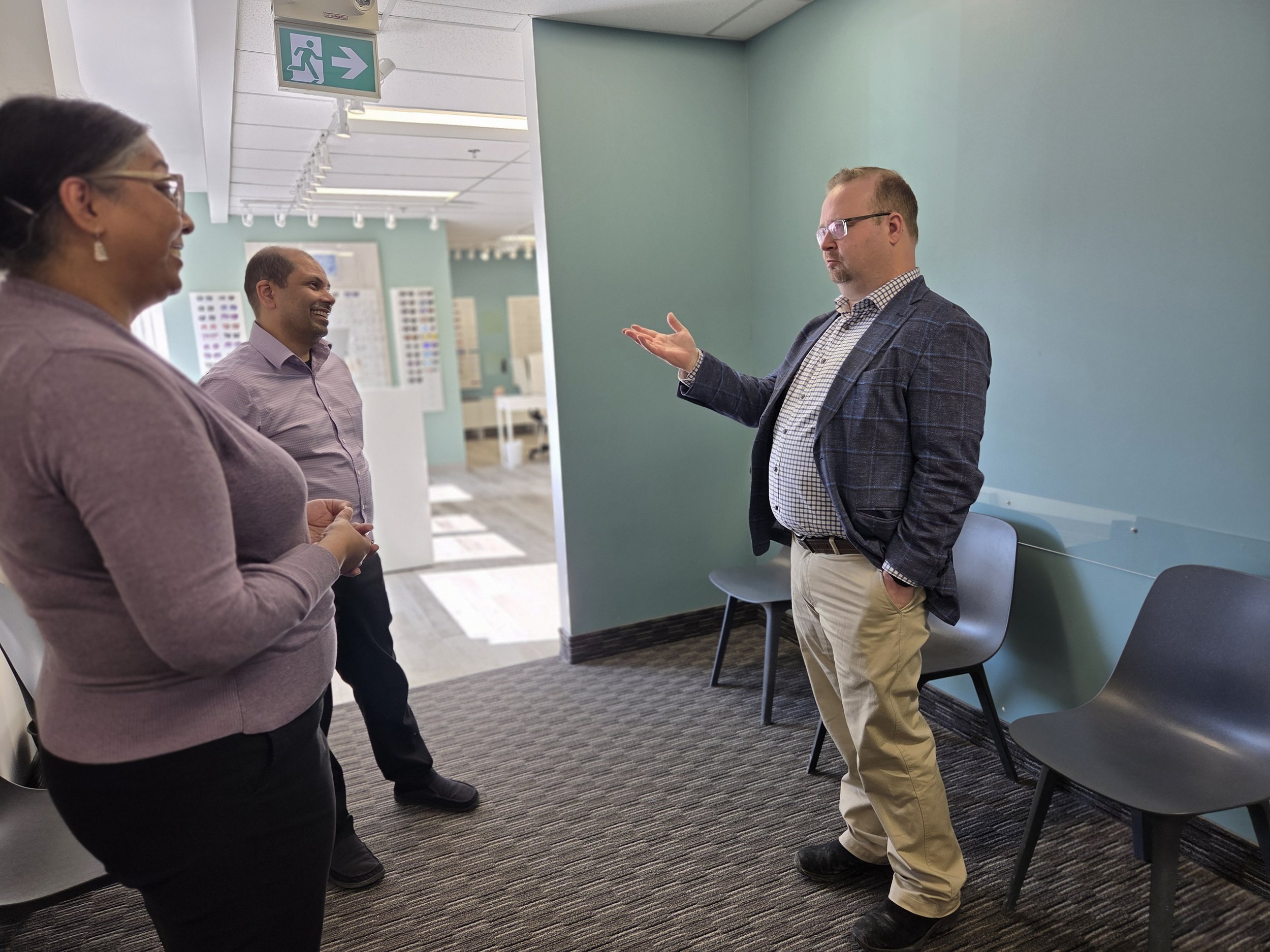
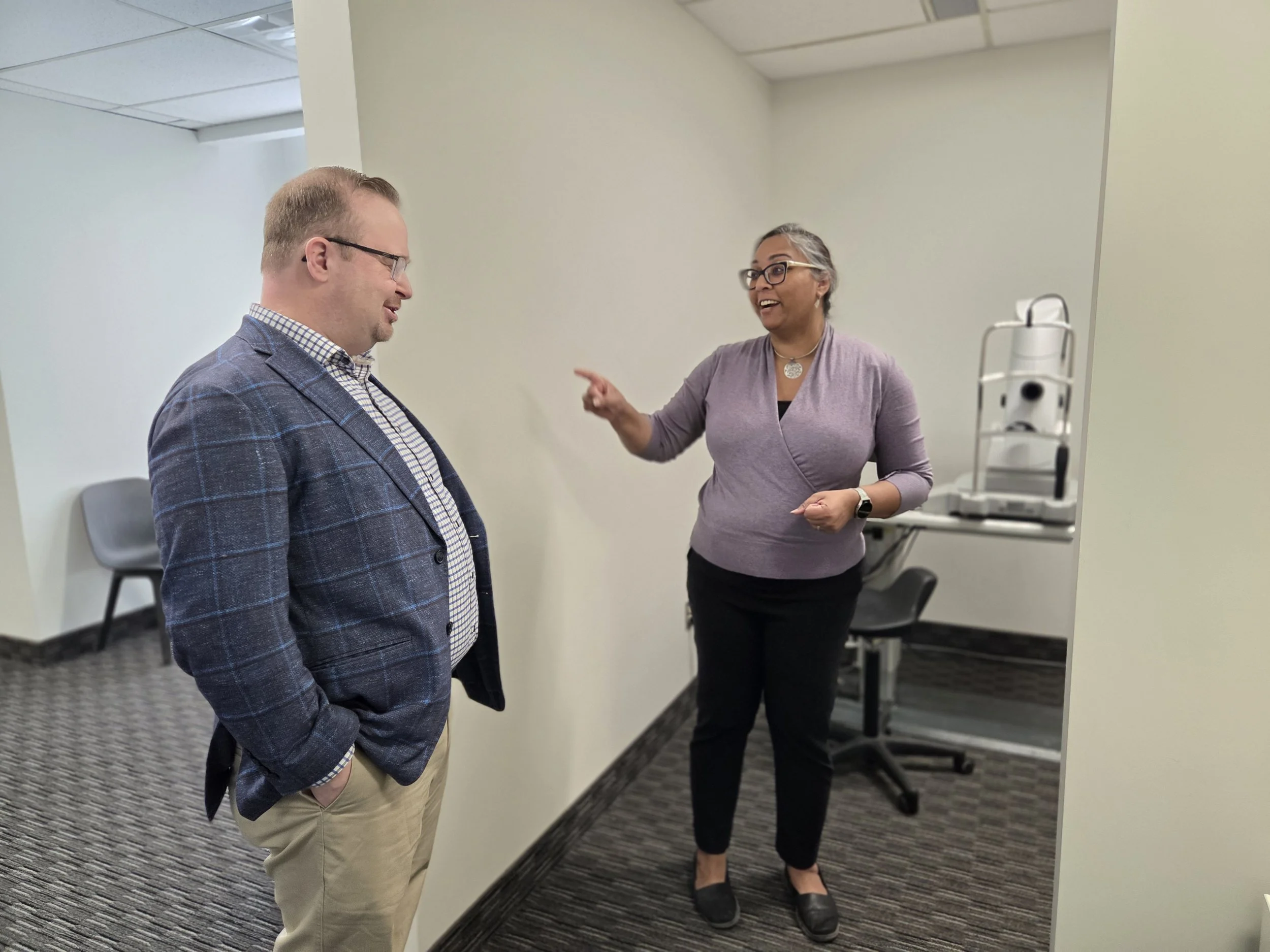
MPP Stephen Blais recently met with members of the Ontario Association of Optometrists and local Orléans optometrists Dr. Janelle King and Dr. Irfaan Adamally to discuss the important role optometry plays in Ontario’s healthcare system and how better investment in eye care could help relieve pressure on hospitals.
Dr. King and Dr. Adamally have served the Orléans community for more than 16 years at Centrum, providing comprehensive eye care in a clinic designed with accessibility in mind. Their practice offers easy parking, access to public transit, and a fully accessible facility with ramps, elevators, and spacious exam areas, helping ensure patients of all ages and mobility levels can receive care.
During the discussion, the optometrists highlighted the strength of Canada’s eye care system. Optometry in Canada is widely recognized as among the best in the world, with rigorous training and high professional standards that allow optometrists to diagnose and manage many eye conditions safely and effectively in community clinics.
Dr. King and Dr. Adamally are also strong advocates for the profession and for improving patient access to eye care. Their clinic supports a wide range of patients in Orléans and carries many Canadian-sourced eyeglasses from small independent producers, helping support domestic manufacturers while providing patients with high-quality options.
The conversation also focused on how optometry can help divert non-emergency cases away from overcrowded hospital emergency rooms. With appropriate investment and policy support, optometrists can manage many eye-related issues in community settings, allowing hospitals to focus on more urgent cases.
Examples from other jurisdictions highlight the potential benefits of strengthening access to eye care. Quebec offers vouchers to help children obtain eyeglasses, while in the United Kingdom eye care services are integrated into the public healthcare system, where studies show that 96 per cent of patients with eye concerns are treated outside of hospital emergency departments.
However, Ontario optometrists face growing challenges. Remuneration for insured eye care services under the provincial system has not kept pace with rising costs, with compensation levels that have remained largely unchanged since 1989. Many practitioners say this situation is becoming increasingly untenable, particularly as experienced optometrists retire and fewer new practitioners are able to replace them in community practices. At the same time, changes in private insurance coverage have also begun rolling back certain eye care services, further affecting access for patients.
Blais said the discussion highlighted how community-based eye care can be an important part of the solution to Ontario’s healthcare pressures.
As healthcare demand continues to grow across Ottawa’s east end, conversations like these help inform ongoing discussions about how Ontario can better integrate community healthcare providers into the broader system while improving access for patients.