
When did watching the game turn into a gambling pitch?
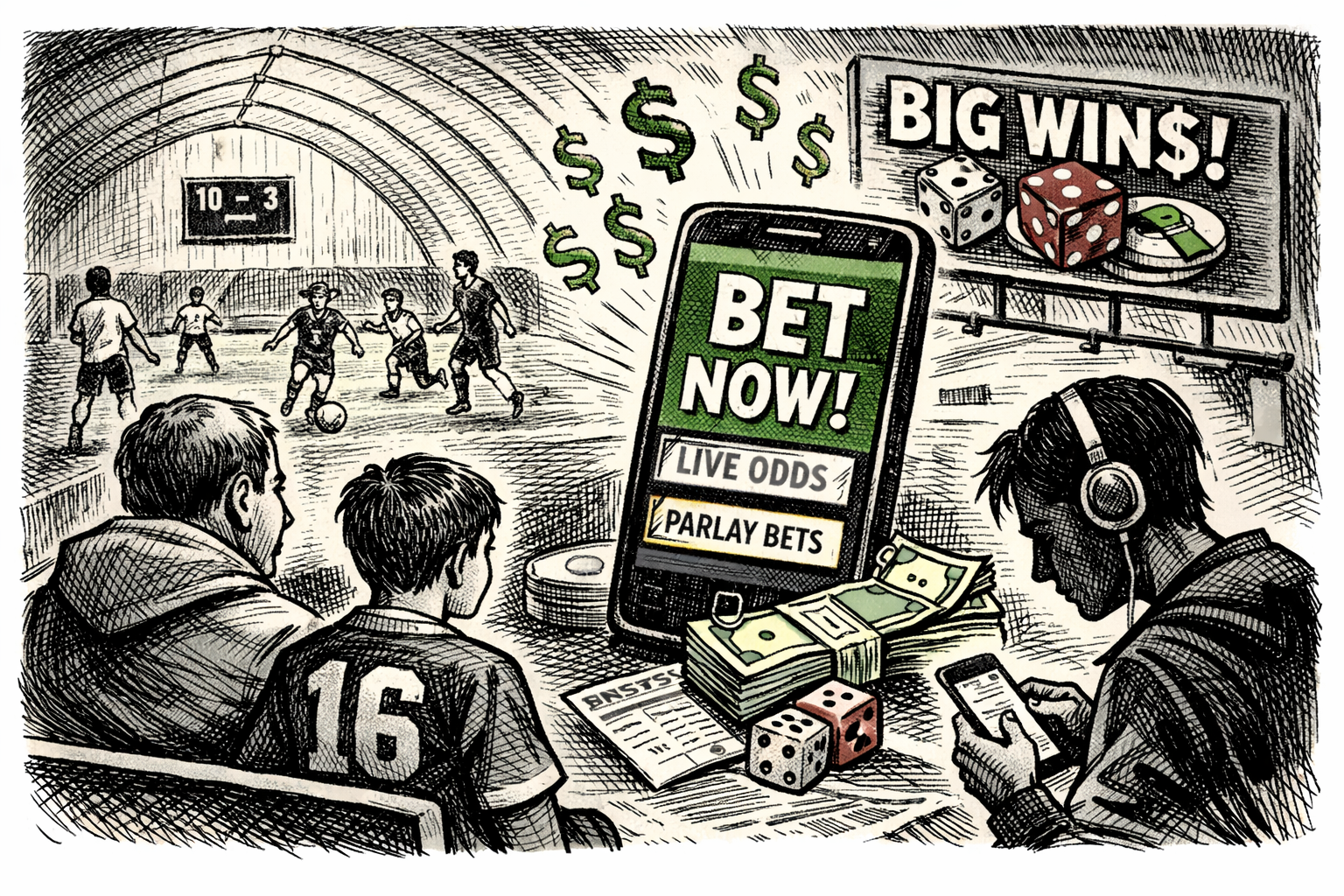
(article originally posted in the Orléans Star)
Most weekends this winter, you’ll find me where a lot of parents are: in a field house or under a dome, cheering from the sidelines, living on coffee and concession stand food.
It’s one of the best parts of being a parent. Kids working hard. Teammates supporting each other. Families in the bleachers.
But lately, there’s something else that follows us everywhere. The betting ads.
At home watching the game. On our phones. Between every commercial break. Even around youth sports venues.
Odds. Parlays. “Bet now.” “Bet live.” “Boost your winnings.”
It’s constant. And it’s starting to feel wrong.
My son is 16. I don’t have to explain what a “same-game parlay” is. He explains it to me.
That should tell us something.
Let me be clear: this isn’t about banning gambling. Adults can make their own choices.
This is about responsibility. We regulate cigarette ads. We regulate cannabis marketing. We restrict alcohol ads around kids.
Yet we’ve allowed online gambling to become a free-for-all during the very sporting events families watch together.
What really worries me is who these ads target. Sports betting is being aimed squarely at young men, the same young men already struggling with disconnection, falling behind in school, and facing rising rates of anxiety and addiction.
We talk about helping boys and young men find purpose. Maybe step one shouldn’t be flooding their phones with apps designed to keep them chasing losses at 11 p.m.
Last year, Ontarians placed more than $82 billion in online bets. That generated roughly $3.2 billion in gambling revenue for operators.
But only a small fraction ends up in government coffers. The rest stays with the companies.
Private operators keep billions in profit. Government collects a modest share. And society pays the real costs: addiction treatment, counselling, family stress, debt, mental health fallout.
We’ve socialized the harm and privatized the reward.
There’s a reasonable middle ground.
Ban misleading “risk-free” promotions. Ban betting ads during televised sports and family programming. Keep them out of youth sports spaces. Make sure revenue goes toward addiction treatment and youth sports, not just corporate profits.
Every other vice has boundaries. This one should too. It’s just basic common sense.
When I take my son to a game, I want him focused on the scoreboard, not the odds.
We can enjoy the game without turning every whistle into a gambling pitch.
That’s something most families would agree on.